
We often view power as a matter of personality or elective office. However, this conversation reveals a more structural reality. True power lies in the systems that build our world—and the people who learn how to manipulate them.
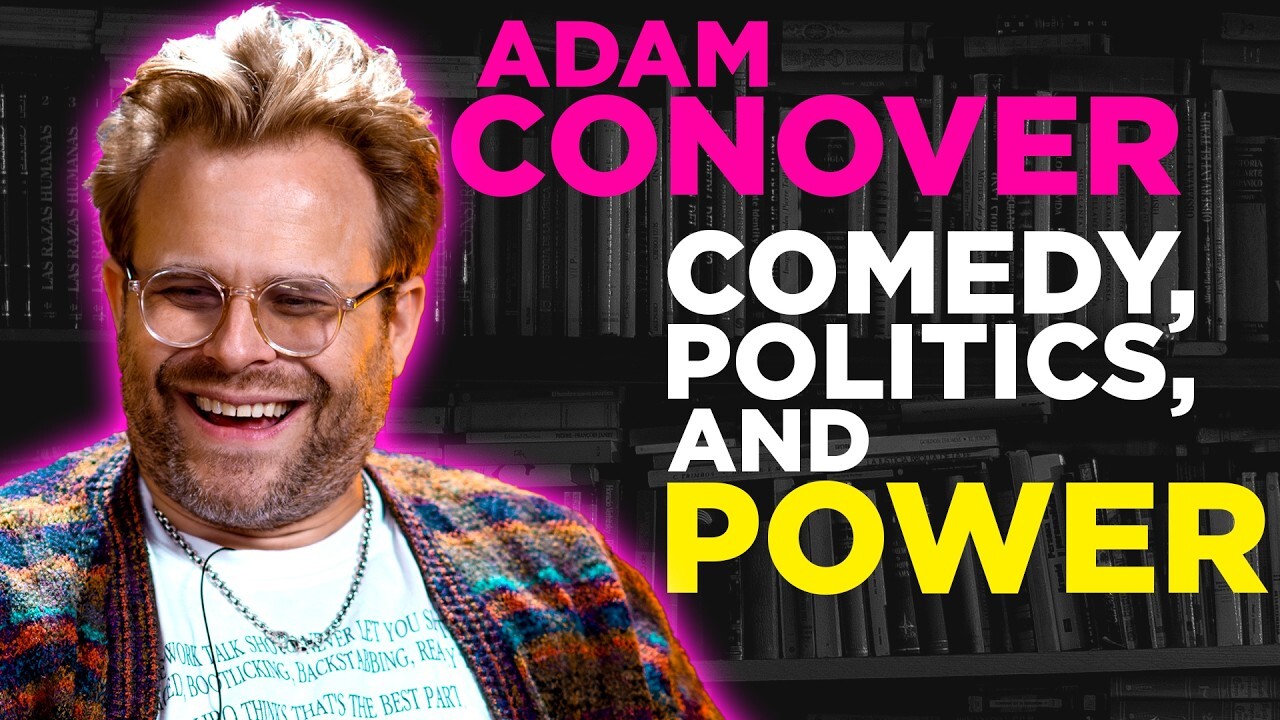
In this episode of Books That Changed My Life, comedian Adam Conover discusses how The Power Broker and systemic power fundamentally altered his understanding of reality. Specifically, he explains why demystifying the “secret history” of our infrastructure is the first step toward reclaiming our agency as citizens.
Understanding these structures is vital because it reveals how identity shapes freedom through the human mind. Furthermore, Adam’s career has been defined by a drive to pull back the curtain on cultural myths. By combining research with comedy, Conover teaches audiences that “common sense” is often just a narrative constructed by those in power.
How Robert Moses Reshaped Modern Infrastructure
Written by Robert Caro, The Power Broker is the definitive biography of Robert Moses. Moses was the unelected official who reshaped New York City. The book argues that power is not just given; it is built through the control of public authorities and physical infrastructure. Because of its granular detail on the mechanics of government, it remains the “ultimate signifier” for anyone seeking to understand the hidden levers of American politics.
One of the key ideas Adam discusses is the transition from a childhood view of the world to an adult understanding of systems. Consequently, Caro’s work reveals that the physical world around us—the highways, the parks, the bridges—was not inevitable. Instead, individuals with specific agendas decided these outcomes. This struggle between authority and the public often mirrors the power and grief lessons from Yertle the Turtle classic story.
Breaking the Illusion of The Power Broker and Systemic Power
The Power Broker challenges the idea that the government is a distant, magical entity. Rather, Adam argues that reading this book provides a vital framework for adult life through three specific lenses:
- The “Sign on the Building”: Power isn’t just about legality; it’s about who controls the physical and public reality.
- Invisible Influence: The most significant changes to our lives often happen through unelected authorities that the public rarely sees.
- Knowledge as Agency: Understanding how a bond measure or a public authority works separates a passive observer from an active citizen.
As a result, Adam shifted his focus from merely debunking myths to examining the deep-seated structures that govern our society today.
Reinvention Through Systems: “The G Word”
The book teaches that transformation happens when we stop looking at individuals and start looking at the “plumbing” of our democracy. Similarly, Adam explains that his creative work—including his Netflix series The G Word—is a direct extension of this philosophy. By focusing on the background processes of the U.S. government, he aims to humanize the machine. In addition, he identifies the gatekeepers who hold “Darth Vader-levels” of influence over public life.
Many people inherit a sense of apathy, believing that the world is too complex to change. However, Adam’s story illustrates a progression from disillusionment to empowered inquiry. Specifically, he moved from asking why systems feel broken to researching the root causes of infrastructure history.
Why These Lessons Still Matter Today
This conversation resonates because it addresses universal tensions found in our series:
- Idealism versus Institutional Reality: How reformers often become the very things they fought.
- Public Benefit versus Private Ambition: The cost of building great things at the expense of local communities.
- Democratic Accountability: The danger of power that exists outside the reach of the ballot box.
Conclusion
The Power Broker did not just provide Adam Conover with historical facts; it offered a disciplined framework for interpreting power. In the end, it gave him the tools to see that the world is a continuous construction project. While the tools of control are complex, the human spirit remains the primary driver of change. When we understand the “plumbing” of our society, we gain the power to fix the leaks.
FAQ
What is the main message of The Power Broker?
It explores how Robert Moses used unelected positions to reshape New York, demonstrating that power often resides in the control of infrastructure.
How did the book influence Adam Conover?
It provided him with a “grown-up” understanding of the world, moving him toward a career focused on systemic investigation.
Is the book only relevant to New Yorkers?
No, it’s lessons on urban planning and public money that apply to every modern city and government structure.
