

Direct Answer
Outsmarting someone, in Andrew Bustamante’s terms, means helping their brain skip unnecessary mental work so they land on a beneficial conclusion — not tricking or coercing them, but creating a net-positive outcome through trust and aligned incentives.
Why this matters now
If you want clearer negotiations, better leadership, or closer personal relationships, Bustamante’s approach turns covert intelligence tradecraft into everyday tools. The payoff is practical: fewer stalled conversations, reduced resistance, and more durable buy-in.
Quick takeaways
- Outsmarting is not manipulation: It’s cognitive conservation—shaping choices so people reach conclusions they actually want.
- Vulnerability builds connection: People disconnect from performed strength and bond over shared weaknesses.
- Radical preference: Committing deeply to craft—caring about the right details—turns work into something that endures.
About the guest
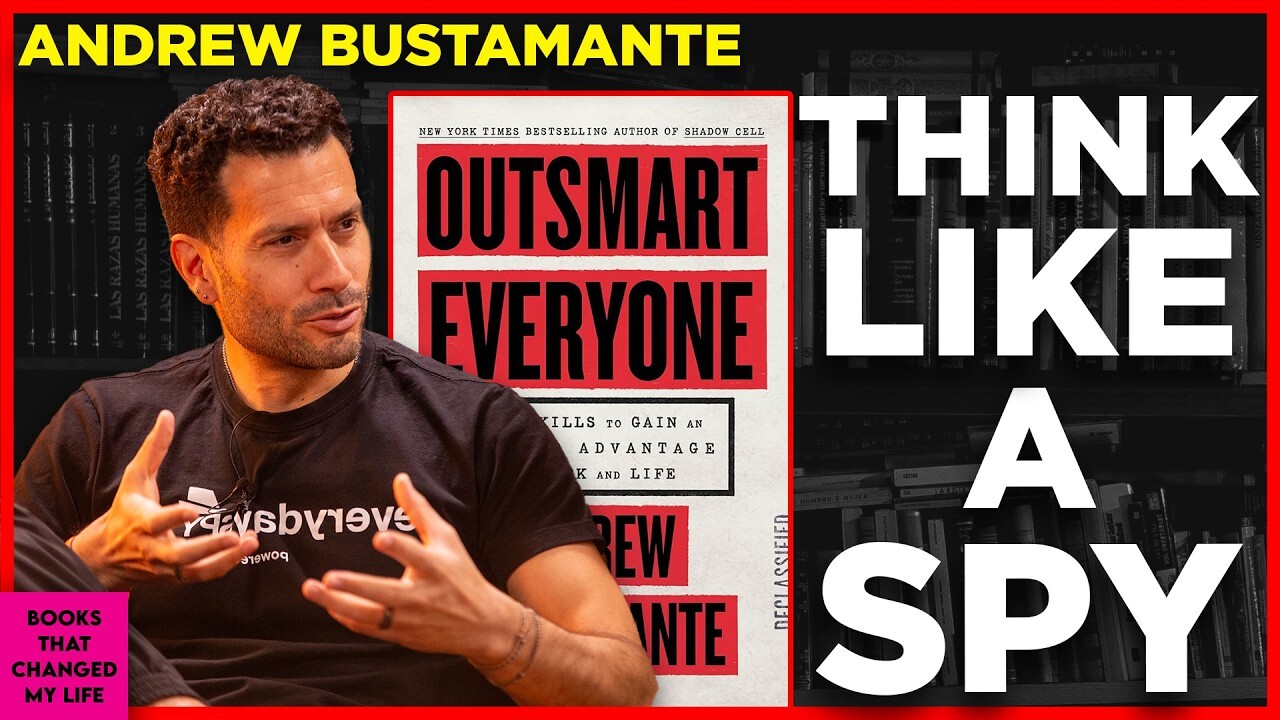
Andrew Bustamante is a former CIA intelligence officer and a US Air Force nuclear missile operator. He speaks and trains teams through EverydaySpy, translating covert tradecraft into decision-making and communication strategies. His book is Outsmart Everyone.
How vulnerability trumps posture
Bustamante uses a vivid image to explain why polished strength often backfires: people act like “turtles trying to cuddle”—their public shells prevent genuine contact. In both intelligence work and everyday life, meaningful influence usually starts when people lower defenses and reveal shared burdens.
- Three overlapping lives: Bustamante describes public, private, and secret spheres that each person navigates. Energy is wasted sustaining a public image.
- Penetrating the shell: Real rapport forms when you connect at the private level, not by matching status symbols or performance.
- When power isolates: Executives and high performers frequently experience loneliness; recognizing and speaking to that isolation can open guarded people more effectively than flattery.
“We repel each other with our strengths and connect with each other through our vulnerabilities.” — Andrew Bustamante
Principles of strategic influence
Rather than a checklist of tricks, Bustamante frames influence as a set of guiding principles that honor the other person’s agency and aim for mutual gain.
Traditional manipulation vs. tradecraft-guided influence
- Traditional manipulation
- Core aim: Win even if the other side loses.
- Mental process: Force or steer an unwanted decision.
- Relationship basis: Power, coercion, or leveraged authority.
- Aftermath: Resentment and eroded trust when the tactic is revealed.
- CIA tradecraft & net-positive influence
- Core aim: Achieve outcomes where both parties benefit.
- Mental process: Help the brain skip steps and reduce cognitive friction toward a conclusion it wants.
- Relationship basis: Trust built by vulnerability, alignment, and accuracy.
- Aftermath: Enduring validation and relief for the person who made the decision.
What Bustamante calls “radical preference”
When applied to art, business, or strategy, “radical preference” describes an uncompromising devotion to what matters most to the creator. It’s less about efficiency and more about fidelity: when you care radically about details, the work resonates beyond immediate utility.
Practical reflection and next steps
Adopting Bustamante’s methods means focusing on observation, lowering personal defenses, and designing interactions that reduce cognitive load for others. This yields clearer decisions and more sustainable relationships—both professionally and personally.
Where to watch and related resources
- Watch the full uncut conversation on the Books That Changed My Life YouTube channel.
- Listen to the episode on Spotify.
- Browse the archive at the main website or the official podcast directory.
- Related interviews: Sara Bareilles on The Interestings, Margaret Cho on I’m With the Band.
Frequently Asked Questions
Q: Does outsmarting someone mean manipulating them for personal gain?
A: Not in Bustamante’s framework. The goal is to arrange the situation so the person reaches a preferred decision with minimal mental friction and without being deceived—an outcome that benefits them as well as you.
Q: Why do tradecraft techniques still work when both parties know them?
A: These techniques are rooted in basic human cognitive shortcuts and social signals. Shared training or awareness doesn’t negate the psychology; it often speeds alignment because both people recognize sincere effort to reduce misunderstanding.
Q: How can you build trust with guarded or high-status individuals?
A: Shift away from matching status displays and toward acknowledging common emotional burdens—loneliness, accountability, risk. Showing empathy for these pressures makes it easier for guarded people to let down their defenses.
Closing notes
Bustamante reframes intelligence tradecraft as practical social tools: observe, reduce friction, and be willing to be vulnerable. When you do, influence becomes a collaborative act rather than a contest.
If you want structural guidance to strengthen leadership and autonomy, see the I AM LEADER Book Set for frameworks that complement these ideas.
Related reading on wakestreet.com: Unlock Real Agency: Complete Story of Power and Control; Why The Interestings Mattered to Sara Bareilles.
