

Direct Answer
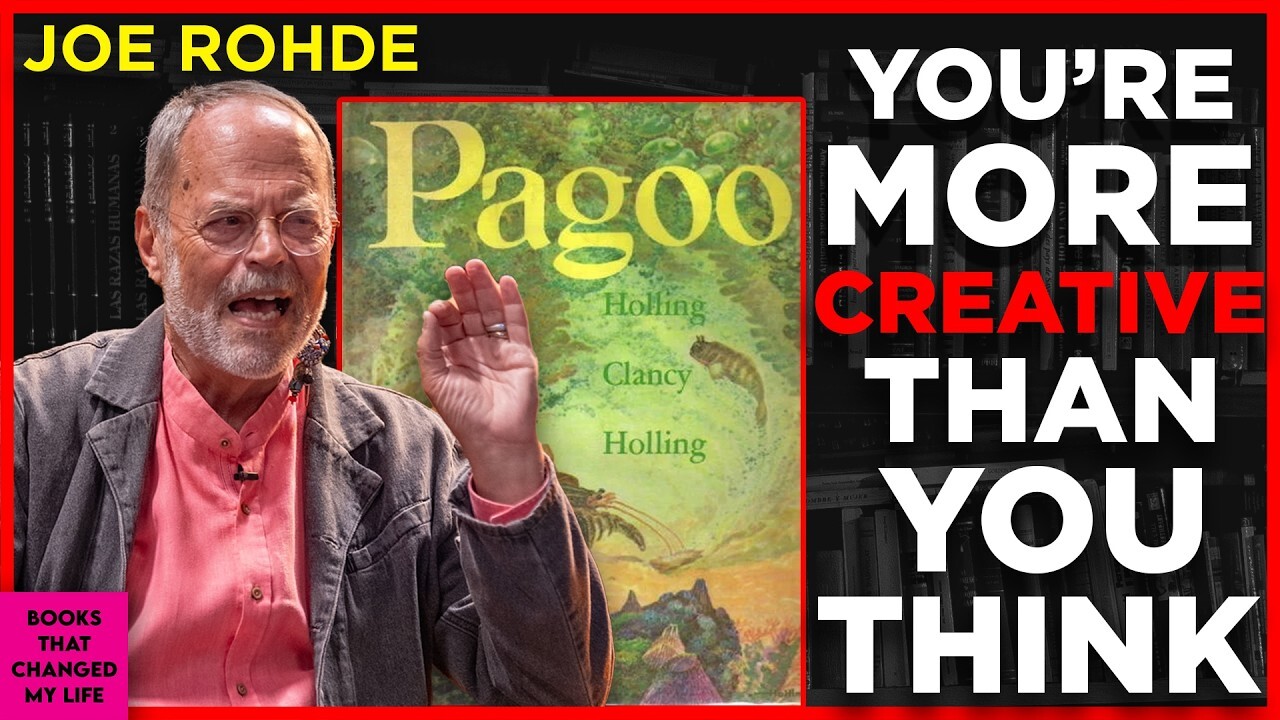
Joe Rohde on Pagoo turns a childhood nature book into a lesson about the science of creative work. The conversation connects brain mechanics, emotional safety, and the slow process of making ideas concrete.
In this Books That Changed My Life conversation, Rohde connects Pagoo, cognitive flexibility, psychological safety, and collaborative design. Joe Rohde on Pagoo becomes a way to understand how imagination moves from private instinct into shared work.
Key Insights
- Joe Rohde on Pagoo treats creativity as trainable, not mystical.
- Pagoo gives Rohde a model for systems, environments, and interdependence.
- Creative teams need trust before fragile ideas can become useful ideas.
- Flat collaboration keeps the shared idea at the center instead of one person’s ego.
- Effectiveness matters when creative work has to move people emotionally.
- Structure helps imaginative work become visible, testable, and buildable.
About the Guest
Joe Rohde is a legendary former Disney Imagineer and creative executive known for leading the concept, design, and construction of Disney’s Animal Kingdom, Aulani, and Pandora – The World of Avatar. With decades of expertise blending anthropology, art, and environmental design, Rohde continues to advise, speak, and write on the mechanics of creative culture and world-building.
About the Book
Pagoo by Holling C. Holling is a richly illustrated, classic marine biology narrative that follows the life cycle of a young hermit crab named Pagoo. Through detailed prose and marginal illustrations, the book explores tide pool ecosystems, adaptation, and the interconnected web of coastal marine life, deeply influencing curious minds with its immersive approach to natural history.
📺 Prefer watching over reading? You can stream full, uncut video conversations on the Books That Changed My Life YouTube Channel.
Observation Comes First
Before a team can build anything meaningful, it has to notice what is actually there. Rohde’s reading of Pagoo values detail, pattern, and patient attention.
What the idea changes
The lesson is practical: creativity improves when people understand the conditions that help ideas stay flexible.
Efficiency Is Not the Whole Game
Rohde separates efficient production from effective creation. Some ideas need loops, revisions, and surprising detours before they become emotionally strong.
How the system works
That system includes attention, feedback, collaboration, and enough structure to turn intuition into action.
How Teams Protect Imagination
Joe Rohde on Pagoo makes collaboration feel less like compromise and more like shared cognition. The team becomes smarter when the idea sits at the center.
What readers can use
For anyone making art, leading a team, or building an experience, the useful question is not whether creativity exists. It is whether the environment helps it grow.
Explore more discussions:
- World-Building: Victoria Aveyard on The Lord of the Rings and Her Craft
- Everyday Inspiration: Patton Oswalt on Finding Magic Daily
- Mindset & Focus: Michael Blaustein on Inner Excellence
Listen to the full uncut conversation on Spotify, browse our complete archive on the main website, or find past episodes on the official podcast directory.
Frequently Asked Questions
What is Joe Rohde on Pagoo mainly about?
It is mainly about creativity as a structured process. Rohde uses Pagoo and his design career to explain why ideas need systems, trust, and observation.
Why does Pagoo matter to Joe Rohde?
Pagoo shows a living creature inside a connected ecosystem. That helped Rohde think about immersive design as a network of relationships rather than isolated details.
What can creative teams learn from this?
Creative teams can learn to protect ambiguity, build psychological safety, and use structure without turning the work mechanical.
Bottom Line
Joe Rohde on Pagoo makes creativity feel both human and teachable. The book gives Rohde a language for systems, and his career shows how those systems can turn imagination into experiences people remember.
