
Direct Answer
A room can look beautiful in a photograph and still feel inconvenient to use. A desk may be too far from an electrical outlet, reading materials may be stored away from the sofa, or everyday belongings may have no obvious place to go. These small frustrations can make a home harder to enjoy, even when its decor looks carefully planned.
That is one reason lived-in spaces are gaining appeal. People are paying more attention to how their surroundings support daily activities instead of arranging every room around a picture-perfect appearance.
A comfortable home does not need to be perfectly coordinated. It needs a layout that makes everyday tasks easier while leaving room for the belongings and details that reflect the people who live there.

Observe How You Move Through Each Room
Before rearranging furniture, pay attention to what happens during an ordinary day. Notice where you sit to read, where you put your phone, which surfaces collect paperwork, and where bags or blankets tend to end up.
These patterns can reveal what a room is missing. If books repeatedly gather beside the sofa, for example, a nearby shelf or basket may be more useful than another decorative accessory. If work materials spread across the dining table, a small storage area could make it easier to clear the space after working.
Try observing the room at different times of day. Morning routines, work hours, and evenings may involve different activities and storage needs.
The goal is to understand how the room already functions before deciding what should change.
Give Everyday Activities Their Own Practical Areas
Not every home has enough space for a separate room for each activity. However, even a small area can serve a clear purpose when its furniture and storage are arranged thoughtfully.
Consider a few common examples:
- Reading: Keep a comfortable chair, reading lamp, and current books together. A small side table can hold a drink or reading glasses.
- Remote work: Arrange a desk, suitable lighting, and frequently used supplies within easy reach. A basket or drawer can keep work materials together when the day ends.
- Relaxing: Keep blankets and other frequently used items close to the sofa rather than storing them somewhere inconvenient.
- Hobbies: Use a dedicated shelf, box, or small table to keep supplies accessible without allowing them to spread across the entire room.
These arrangements make lived-in spaces more useful because the layout reflects actual habits rather than an idealized version of how a home should be used.
Let Personal Belongings Support the Room
Books, artwork, photographs, and vintage finds can contribute to the character of a home, but their placement matters.
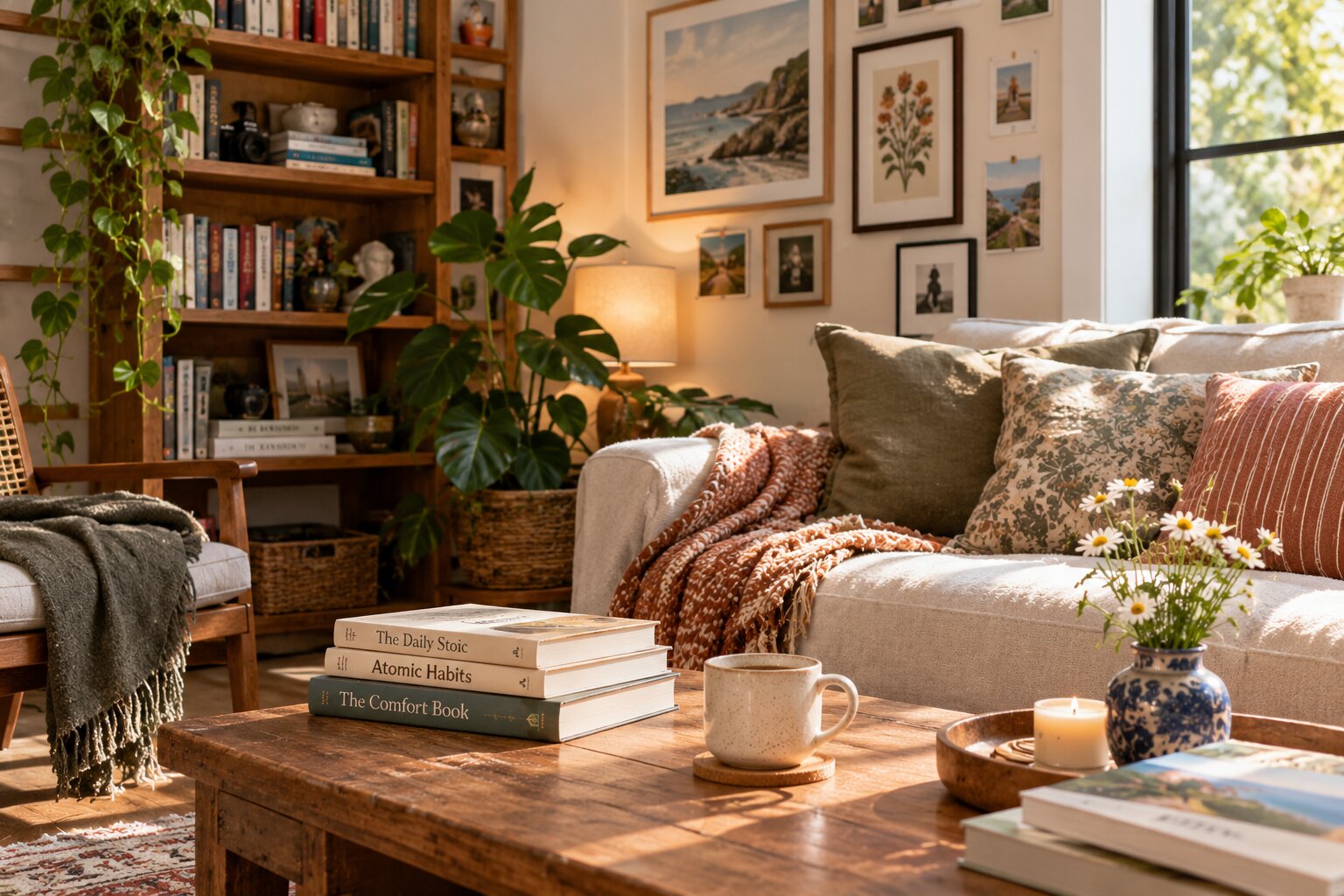
A favorite book collection might belong near the seating area where people actually read. Family photographs could be displayed in a hallway or on a shelf that residents pass regularly. A handmade mug might become part of a reading corner rather than being kept away in a cabinet.
Artwork can also help give a room its own identity. Combine prints, postcards, photographs, and secondhand frames according to what you enjoy. Matching every frame is unnecessary; a balanced arrangement is often enough.
The important thing is to make personal objects part of the lived-in spaces without allowing them to interfere with its purpose. A display should be easy to enjoy and maintain.
Make Storage Convenient for the People Using It
Storage often fails when items are placed where they look tidy rather than where they are needed.
For example, blankets are easier to put away when a basket is near the sofa. Work supplies are less likely to remain on the dining table when a drawer or container is close to the workspace. Books are more likely to stay organized when shelves are accessible from the places where people read.
Think about the distance between an item and the activity it supports. Moving storage a short distance can sometimes make a bigger difference than purchasing additional furniture.
It also helps to leave some open surfaces. Not every shelf, counter, or table needs to hold decorative objects. Clear space makes everyday tasks easier and gives meaningful belongings room to stand out.
Choose Comfort Over a Perfectly Coordinated Look
A home does not need to follow one decorating style to feel cohesive. A secondhand chair, a wooden side table, a woven basket, and a knitted throw can work together even when they were purchased at different times.
Different materials can add warmth without requiring more objects. Linen, wool, wood, ceramic, and woven fibers bring different textures into a room. Repeating one or two materials can help connect furniture and accessories that otherwise look unrelated.
Comfort also matters when choosing furniture. A chair that looks attractive but is uncomfortable may not become the reading spot you imagined. A beautiful table that blocks movement may make a room less practical.
The appeal of lived-in spaces comes partly from this freedom to prioritize the experience of living in a home rather than maintaining a flawless display.
Lived-in spaces that feel comfortable can also make it easier to slow down and enjoy the things you love, whether that’s reading about soft ambition or simply taking a quiet break at the end of the day.
Review What Works After a Week
Once you have adjusted a room, give the new arrangement some time. Notice whether the items you use regularly are easier to reach, whether walkways remain clear, and whether belongings return to their storage places without much effort.
If clutter keeps gathering in one location, consider whether the storage is too far away or whether the room needs a different arrangement. If a chair remains unused, perhaps it is not comfortable or is positioned in an inconvenient spot.
Research published in the Journal of Environmental Psychology has explored the relationship between home clutter and psychological well-being, including the role of perceived beauty. This does not mean a home must be spotless. It suggests that the balance between personal belongings and a usable environment deserves consideration.
IKEA’s Life at Home research also explores how comfort, identity, and belonging shape people’s experience of their homes. A room should feel pleasant, but it should also make ordinary life easier.
Frequently Asked Questions
What makes a home feel lived-in?
A lived-in home reflects its residents’ routines, interests, and experiences. Books, collected artwork, photographs, comfortable furniture, and everyday belongings can all contribute. The result can be tidy and organized without looking like a showroom.
How can I make a small room more functional?
Identify the activities that happen there most often, then keep the furniture and supplies for those activities nearby. Use baskets, shelves, and multipurpose furniture where helpful, while keeping walkways and frequently used surfaces clear.
Should every room have a specific purpose?
Not necessarily. A small room may serve as both a workspace and a guest area. The important thing is to make it easy to switch between activities, perhaps by using a dedicated storage container for items that need to be put away.
How do I display books and artwork without creating clutter?
Keep a manageable selection visible and store or rotate the rest. Arrange books where they are accessible, group related artwork, and leave some open space on shelves and tables.
Can a home be both personal and minimalist?
Yes. Minimalism and personal decorating are not mutually exclusive. You can keep furniture and belongings limited while choosing pieces that have meaning, support daily activities, or make the room more comfortable.
Final Thoughts
A home should work for the people who live in it. The most useful arrangement may be a reading chair beside a bookshelf, a basket near the sofa, or a small workspace that can be packed away at the end of the day.
Lived-in spaces become more welcoming when their layouts support real routines and make room for personal belongings. Instead of constantly resetting a room to make it look perfect, arrange it so that everyday life fits naturally.
Further Reading for the Soul
- Why Do Women Crave Comfort Fiction?
- How The Seat of the Soul Influenced Tiffani Thiessen
- Related reading on wakestreet.com: making a small home workspace function better; turning everyday storage objects into useful decor.